The influence of cultural prohibitions on wildlife hunting and consumption in western Madagascar
Keywords:
gibier, chasse, tabou alimentaire, fady, interdiction culturelle, aversion alimentaire, game, hunting, taboo, wildlife huntingAbstract
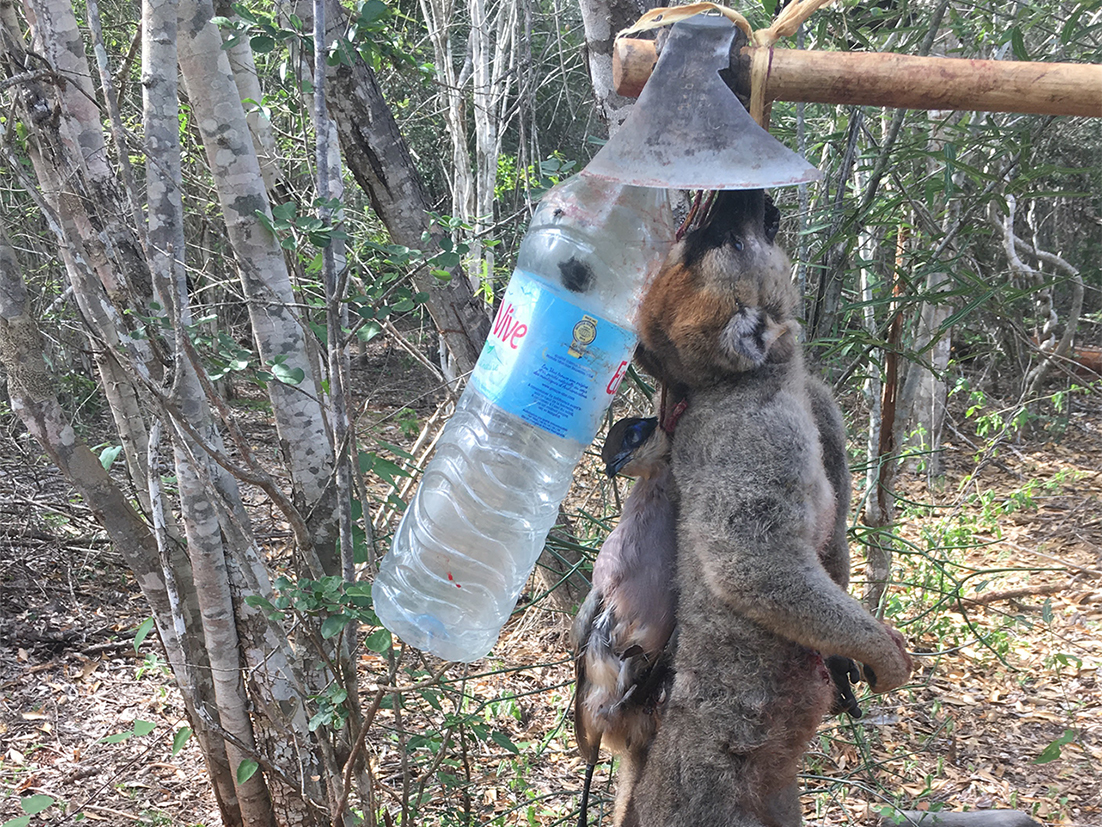
Unsustainable hunting is a leading driver of species decline globally, particularly in biodiversity hotspots like Madagascar, where wildlife conservation challenges intersect with severe humanitarian needs. In the Menabe Region near Kirindy Mitea National Park, wildlife hunting persists despite various prohibitions. While national legal frameworks, often developed with limited local input, seek to regulate hunting and consumption behaviors, regional studies have consistently shown that these laws alone are insufficient in safeguarding vulnerable species. In contrast, food prohibitions, such as species-specific taboos (or traditional fady in the case of Madagascar), are culturally derived prohibitions and ethical relations that shape how Malagasy individuals perceive and engage with wild and domestic animals. Previous research has highlighted the potential of fady to protect particular species while also acknowledging the complex nature of fady adherence in conservation contexts. This paper considers the impact of both locally rooted belief systems and national regulatory structures on wildlife use in a village near Kirindy Mitea National Park, where communities are navigating intersecting challenges of food insecurity and reliance on wild meat for sustenance. We carried out quantitative surveys of heads of households regarding their personal beliefs and adherence to taboos and laws, and expanded upon this information through focus groups and semi-structured interviews with key informants. While fady discouraged consumption in some species, it did not significantly impact hunting behavior. Similarly, stricter hunting laws are associated with reduced consumption but have little impact on hunting practices, primarily due to poor law awareness. These findings underscore the limitations of top-down conservation policies and the need to support community-led conservation approaches that are informed by local priorities, challenges, and existing governance structures. Effective conservation policies must simultaneously recognize and address structural challenges, like food insecurity, that shape decision-making. These findings suggest the need for ongoing, community-engaged qualitative research into the material and sociocultural contexts that inform decision-making about wildlife use.
Résumé
La chasse non durable entraîne le déclin des populations de nombreuses espèces dans le monde, notamment à Madagascar, un hotspot de la biodiversité confronté à de graves défis écologiques et humanitaires. Bien que des lois imposées au niveau central visent à régulariser la chasse et les comportements des consommateurs, des études régionales ont montré que ces lois, à elles seules, ne suffisent pas à protéger les espèces vulnérables. En revanche, les interdictions alimentaires, telles que les tabous spécifiques à certaines espèces (fady de consommation dans le contexte malgache), sont des interdits d'origine culturelle qui influencent la perception et l'utilisation de la viande sauvage et domestique par les Malgaches. Des recherches antérieures ont mis en évidence le rôle potentiel des fady dans la protection de certaines espèces, tout en reconnaissant la complexité de leur respect dans un contexte de conservation. Cet article examine l’influence des interdictions culturelles et légales sur l’utilisation de la faune dans un village proche du parc national de Kirindy Mitea, dans la région de Menabe, à l’ouest de Madagascar. Ce village est caractérisé par un niveau élevé de chasse aux animaux sauvages, combiné à une insécurité alimentaire et une malnutrition significatives, mais l'effet des interdictions sur l'utilisation de la faune y a été peu étudié. Nous avons mené des enquêtes quantitatives auprès de chefs de ménage sur leurs croyances personnelles et leur adhésion aux fady, et complété ces informations par des groupes de discussion et des entretiens semi-structurés avec des informateurs clés. Bien que les fady influencent négativement la consommation, ils n'ont pas d'effet significatif sur la capture des animaux. De même, des lois plus strictes sur la chasse sont associées à une réduction de la consommation, bien que les résultats soient nuancés. Toutefois, les lois de conservation imposées d'en haut étaient peu connues dans la communauté et n'ont pas réduit la capture et la consommation de la faune sauvage. Nous recommandons des études qualitatives supplémentaires pour mieux comprendre les conditions dans lesquelles les individus consomment des espèces qu'ils considèrent comme immangeables ou culturellement interdites, afin d'expliquer leur prise de décision en matière d'utilisation de la faune.
References
Al Amin, M. A., Adrianto, L., Kusumastanto, T. and Imran, Z. 2021. Community knowledge, attitudes and practices towards environmental conservation: Assessing influencing factors in Jor Bay Lombok Indonesia. Marine Policy 129: 104521. <https://doi.org/10.1016/j.marpol.2021.104521>
Anania, A., Salmona, J., Rasolondraibe, E., Jan, F., Chikhi, L., et al. 2018. Taboo adherence and presence of Perrier’s sifaka (Propithecus perrieri) in Andrafiamena forest. Madagascar Conservation & Development 13, 1: 6–14. <https://doi.org/10.4314/mcd.v13i1.1>
Birch, L. L. 1999. Development of food preferences. Annual Review of Nutrition 19: 41–62. <https://doi.org/10.1146/annurev.nutr.19.1.41>
Borgerson, C., Randrianasolo, J. F., Andraina, T. R., Anjaranirina, E. J. G., Randriamady, H. J., et al. 2019. Wildlife hunting in complex human-environmental systems: How understanding natural resource use and human welfare can improve conservation in the Ankarafantsika National Park, Madagascar. Madagascar Conservation & Development 14, 1: 37–45. <https://doi.org/10.4314/mcd.v14i1.7>
Borgerson, C., Johnson, S. E., Hall, E., Brown, K. A., Narváez-Torres, P. R., et al. 2022. A national-level assessment of lemur hunting pressure in Madagascar. International Journal of Primatology 43, 1: 92–113. <https://doi.org/10.1007/s10764-021-00215-5>
Borgerson, C., Bankoff, R. J., Golden, C. D., Razafindrapaoly, B. N., Rasolofoniaina, B. J. R., et al. 2023. Drivers and sustainability of bird hunting in Madagascar. Conservation Letters 16, 4: e12960. <https://doi.org/10.1111/conl.12960>
Cinner, J. E. 2007. The role of taboos in conserving coastal resources in Madagascar. Traditional Marine Resource Management and Knowledge Information Bulletin, 22, 15–23. <https://www.spc.int/DigitalLibrary/Doc/FAME/InfoBull/TRAD/22/TRAD22_15_Cinner.html>
Colding, J. and Folke, C. 1997. The relations among threatened species, their protection, and taboos. Conservation Ecology 1, 1: 6. <https://doi.org/10.5751/ES-00018-010106>
Colding, J. and Folke, C. 2001. Social taboos: “Invisible” systems of local resource management and biological conservation. Ecological Applications 11, 2: 584–600. <https://doi.org/10.2307/3060911>
Farris, Z. J., Golden, C. D., Karpanty, S., Murphy, A., Stauffer, D., et al. 2015. Hunting, exotic carnivores, and habitat loss: anthropogenic effects on a native carnivore community, Madagascar. PLoS ONE 10, 9: e0136456. <https://doi.org/10.1371/journal.pone.0136456>
Fernández-Llamazares, Á., López-Baucells, A., Rocha, R., Andriamitandrina, S. F. M., Andriatafika, Z. E., et al. 2018. Are sacred caves still safe havens for the endemic bats of Madagascar? Oryx 52, 2: 271–275. <https://doi.org/10.1017/S0030605317001648>
Fessler, D. and Navarrete, C. D. 2003. Meat is good to taboo: Dietary proscriptions as a product of the interaction of psychological mechanisms and social processes. Journal of Cognition and Culture 3, 1: 1–40. <https://doi.org/10.1163/156853703321598563>
Finn, C., Grattarola, F. and Pincheira-Donoso, D. 2023. More losers than winners: Investigating Anthropocene defaunation through the diversity of population trends. Biological Reviews 98, 5: 1732–1748. <https://doi.org/10.1111/brv.12974>
García, G. and Goodman, S. M. 2003. Hunting of protected animals in the Parc National d’Ankarafantsika, north-western Madagascar. Oryx 37, 1: 115–118. <https://doi.org/10.1017/S0030605303000206>
Golden, C. D. 2009. Bushmeat hunting and use in the Makira Forest, north-eastern Madagascar: A conservation and livelihoods issue. Oryx 43, 3: 386–392. <https://doi.org/10.1017/S0030605309000131>
Golden, C. D., Bonds, M. H., Brashares, J. S., Rodolph Rasolofoniaina, B. J. and Kremen, C. 2014. Economic Valuation of Subsistence Harvest of Wildlife in Madagascar. Conservation Biology 2, 1: 234–243. <https://doi.org/10.1111/cobi.12174>
Golden, C. D. and Comaroff, J. 2015a. Effects of social change on wildlife consumption taboos in northeastern Madagascar. Ecology and Society 20, 2: 41. <https://doi.org/10.5751/ES-07589-200241>
Golden, C. D. and Comaroff, J. 2015b. The human health and conservation relevance of food taboos in northeastern Madagascar. Ecology and Society 20, 2: 42. <https://doi.org/10.5751/ES-07590-200242>
Goodman, S. M. and Raselimanana, A. 2003. Hunting of wild animals by Sakalava of the Menabe region: A field report from Kirindy-Mite. Lemur News 8: 4–6.
Goody, J. and Goody, E. 1995. Food and identities: Changing patterns of consumption in Ghana. Cambridge Anthropology 18, 3: 1–14. <https://www.jstor.org/stable/23818753>
Imai, K., King, G. and Lou, O. 2007. Zelig: Everyone’s Statistical Software. Computer software. Available online <https://zelig.hsites.harvard.edu>
Jenkins, R. K. B. and Racey, P. A. 2008. Bats as bushmeat in Madagascar. Madagascar Conservation & Development 3, 1: 17– 21. <https://doi.org/10.4314/mcd.v3i1.44132>
Jenkins, R., Keane, A., Rakotoarivelo, A. R., Rakotomboavonjy, V., Randrianandrianina, F. H., et al. 2011. Analysis of patterns of bushmeat consumption reveals extensive exploitation of protected species in eastern Madagascar. PLoS ONE 6, 12: e27570. <https://doi.org/10.1371/journal.pone.0027570>
Jones, J. P. G., Andriamarovololona, M. M. and Hockley, N. 2008. The Importance of Taboo and Social Norms to Conversation in Madagascar. Conservation Biology 22, 4: 976–986. <https://doi.org/10.1111/j.1523-1739.2008.00970.x>
Kamp, M. 2019. Hunger and potatoes: The 1933 famine in Uzbekistan and changing foodways. Kritika: Explorations in Russian and Eurasian History 20, 2: 237–267. <https://hdl.handle.net/2022/31273>
Keane, A., Ramarolahy, A. A., Jones, J. P. G. and Milner-Gulland, E. J. 2011. Evidence for the effects of environmental engagement and education on knowledge of wildlife laws in Madagascar. Conservation Letters 4, 1: 55–63. <https://doi.org/10.1111/j.1755-263X.2010.00144.x>
Keller, E. 2009. The danger of misunderstanding ‘culture.’ Madagascar Conservation & Development 4. 2: 82–85. <https://doi.org/10.4314/mcd.v4i2.48647>
Lambeck, M. 1992. Taboo as cultural practice among Malagasy speakers. Man 27, 2: 245–266. <https://doi.org/10.2307/2804053>
Landim, A. S., de Menezes Souza, J., dos Santos, L. B., de Freitas Lins-Neto, E. M., da Silva, D. T. and Ferreira, F. S. 2023. Food taboos and animal conservation: A systematic review on how cultural expressions influence interaction with wildlife species. Journal of Ethnobiology and Ethnomedicine 19, 1: 31. <https://doi.org/10.1186/s13002-023-00600-9>
Lilette, V. 2006. Mixed results: Conservation of the marine turtle and the red-tailed tropicbird by Vezo semi-nomadic fishers. Conservation and Society 4, 2: 262–286. <https://journals.lww.com/coas/fulltext/2006/04020/mixed_results__conservation_of_the_marine_turtle.4.aspx>
Lobban, R. A. 1994. Pigs and their prohibition. International Journal of Middle East Studies 26, 1: 57–75. <https://doi.org/10.1017/S0020743800059766>
Loudon, J. E., Sauther, M. L., Fish, K. D., Hunter-Ishikawa, M. and Ibrahim, Y. J. 2006. One reserve, three primates: Applying a holistic approach to understand the interconnections among ring-tailed lemurs (Lemur catta), Verreaux’s sifaka (Propithecus verreauxi), and humans (Homo sapiens) at Beza Mahafaly Special Reserve, Madagascar. Ecological and Environmental Anthropology (University of Georgia) 2: 2. Online <https://digitalcommons.unl.edu/cgi/viewcontent.cgi?article=1006&context=icwdmeea>
Merson, S. D., Dollar, L. J., Johnson, P. J. and Macdonald, D. W. 2019. Retaliatory killing and human perceptions of Madagascar’s largest carnivore and livestock predator, the fosa (Cryptoprocta ferox). PLoS ONE 14, 3: e0213341. <https://doi.org/10.1371/journal.pone.0213341>
Meyer-Rochow, V. B. 2009. Food taboos: Their origins and purposes. Journal of Ethnobiology and Ethnomedicine 5, 1: 18. <https://doi.org/10.1186/1746-4269-5-18>
Ministère de l’Environment, des Eaux et Forêts et du Tourisme. 2006. Manuel de Procédures pour la Gestion de la Faune et de la Flore sauvages de Madagascar. Available online <https://cites.org/sites/default/files/common/com/pc/20/inf_docs/F20-11i-A4.pdf>
Minnis, P. E. 2021. Famine Foods: Plants we Eat to Survive. University of Arizona Press. <https://doi.org/10.2307/j.ctv1k13b98>
OECD. (no date). Meat consumption (indicator). Retrieved April 14, 2024, from <http://data.oecd.org/agroutput/meat-consumption.htm>
Rachlinski, J. J. 1999. The limits of social norms. Chicago-Kent Law Review 74, 4: 1537–1567. <https://scholarship.kentlaw.iit.edu/cklawreview/vol74/iss4/6/>
Rakotoarivony, R., Kassie, D., Andriamahefa, A., Andria-Mananjara, D., Rakotoarinoro, M., et al. 2024. Assessment of domestic pig–bushpig (Potamochoerus larvatus) interactions through local knowledge in rural areas of Madagascar. Scientific Reports 14, 1: 16310. <https://doi.org/10.1038/s41598-024-67208-1>
Rakotoson, L. R. and Tanner, K. 2006. Community-based governance of coastal zone and marine resources in Madagascar. Ocean & Coastal Management 49, 11: 855–872. <https://doi.org/10.1016/j.ocecoaman.2006.08.003>
Randrianandrianina, F. H., Racey, P. A. and Jenkins, R. K. B. 2010. Hunting and consumption of mammals and birds by people in urban areas of western Madagascar. Oryx 44, 3: 411–415. <https://doi.org/10.1017/S003060531000044X>
Razafimanahaka, J. H., Jenkins, R. K. B., Andriafidison, D., Randrianandrianina, F., Rakotomboavonjy, V., et al. 2012. Novel approach for quantifying illegal bushmeat consumption reveals high consumption of protected species in Madagascar. Oryx 46, 4: 584–592. <https://doi.org/10.1017/S0030605312000579>
Reuter, K. E., Randell, H., Wills, A. R. and Janvier, T. E. 2016. Capture, movement, trade, and consumption of mammals in Madagascar. PLoS ONE 11, 2: e0150305. <https://doi.org/10.1371/journal.pone.0150305>
Reuter, K. E., Randell, H., Wills, A. R. and Sewall, B. J. 2016. The consumption of wild meat in Madagascar: Drivers, popularity and food security. Environmental Conservation 43, 3: 273–283. <https://doi.org/10.1017/S0376892916000059>
Ripple, W. J., Abernethy, K., Betts, M. G., Chapron, G., Dirzo, R., et al. 2016. Bushmeat hunting and extinction risk to the world’s mammals. Royal Society Open Science 3, 10: 160498. <https://doi.org/10.1098/rsos.160498>
Romanello, D., Thompson, K. E. T., Andriamavosoloarisoa, N. N. M., Andrianantenaina, M. Y., Razafindrahasy, T. A., et al. 2023. A nuanced examination of primate capture and consumption and human socio-economic well-being in Kirindy Mitea National Park, Madagascar. Animals 13, 18: 18. <https://doi.org/10.3390/ani13182914>
Rozin, P. 1987. Food And Evolution: Toward a Theory of Human Food Habits. Temple University Press. <https://archive.org/details/foodevolutiontow0000unse/mode/2up>
Ruud, J. 1960. Taboo: A Study of Malagasy Customs and Beliefs. Oslo University Press; London.
The Economist Intelligence Unit. 2024. Global Food Security Index. Global Food Security Index (GFSI), June 24. <https://impact.economist.com/sustainability/project/food-security-index>
Thompson, K. E. T., Borgerson, C., Wright, P. C., Randriamanetsy, J. M., Andrianantenaina, M. Y., et al. 2023. A coupled humanitarian and biodiversity crisis in western Madagascar. International Journal of Primatology 44, 3: 430–457. <https://doi.org/10.1007/s10764-022-00338-3>
Vuola, M. and Pyhälä, A. 2016. Local community perceptions of conservation policy: Rights, recognition and reactions. Madagascar Conservation & Development 11, 2: 77–86. https://doi.org/10.4314/mcd.v11i2.6
Winchcombe, R. 2023. The limits of disgust: Eating the inedible during Jamestown’s starving time. Global Food History 11,1: 7–29. <https://doi.org/10.1080/20549547.2023.2234252>
World Bank Group. 2023. Poverty & Equity Brief: Madagascar. <https://databankfiles.worldbank.org/public/ddpext_download/poverty/987B9C90-CB9F-4D93-AE8C-750588BF00QA/current/Global_POVEQ_MDG.pdf>
Downloads
Additional Files
Published
Issue
Section
License
Copyright (c) 2025 Madagascar Conservation & Development

This work is licensed under a Creative Commons Attribution 4.0 International License.
All journal content, except where otherwise noted, is licensed under a creative common Attribution 4.0 International and is published here by the Indian Ocean e-Ink under license from the author(s).